
How to Fax From Computer: A Practical Guide for Businesses and Individuals
What “Fax from Computer” Really Means
When you hear the phrase fax from computer, it refers to sending a traditional fax document without a physical fax machine. Instead of a handset, you use software or an online portal that converts your digital file into a fax signal and routes it over the telephone network. The process can be initiated from a Windows PC, a Mac, or even a mobile browser, making it accessible wherever you have internet connectivity.
Modern solutions bridge the gap between legacy fax infrastructure and today’s cloud‑first workflows. They typically require a subscription, a small amount of configuration, and a reliable internet connection. The result is a seamless experience that feels like sending an email, yet the recipient receives a paper copy on their fax machine.
Who Needs to Fax From a Computer?
Although email and e‑signatures dominate most communications, several industries still rely heavily on fax for legal, regulatory, or security reasons. Healthcare providers, law firms, and financial institutions often must transmit patient records, contracts, or signed agreements via fax to meet compliance standards.
Beyond regulated sectors, small businesses and freelancers use fax to reach clients who haven’t adopted digital document exchange. If you’ve ever needed to send a signed lease or a purchase order to a vendor who only accepts fax, you’ll appreciate the convenience of a fax from computer solution.
How the Technology Works: Software vs. Cloud Services
There are two primary ways to achieve faxing from a computer: installing dedicated fax software on your device or using a cloud‑based fax service that runs entirely in a web browser.
Software‑Based Fax (Desktop)
Desktop fax programs act as a virtual fax machine. They interface with a physical fax modem attached to your computer’s serial or USB port, or they emulate a modem using your internet connection. This approach gives you full control over the fax queue, logs, and customization but requires hardware maintenance.
Cloud Fax Services (Web)
Cloud services eliminate the need for a physical modem. You upload a PDF, Word document, or image, type the recipient’s fax number, and the provider handles the transmission over a secure gateway. Most services include a web dashboard, mobile app, and API for integration with existing business tools.
Key Features to Look For
When evaluating a solution to fax from computer, focus on the capabilities that directly impact your workflow. Below is a quick comparison of typical feature sets.
| Feature | Desktop Software | Cloud Fax Service |
|---|---|---|
| Initial Setup Time | Medium – requires modem installation | Low – web registration only |
| Scalability | Limited – each workstation needs its own license | High – add users through admin console |
| Security & Compliance | Depends on local IT controls | HIPAA‑ready, encrypted transmission |
| Integration Options | Basic API, limited third‑party apps | Extensive APIs, CRM & ERP connectors |
| Cost Model | One‑time purchase + modem cost | Pay‑per‑page or monthly subscription |
Beyond these basics, consider whether the provider offers a dashboard for tracking sent and received faxes, automated workflows that trigger alerts, and the ability to store fax logs for audit purposes.
Step‑by‑Step Setup Guide
Getting started with fax from computer is simpler than most people expect. Follow these steps to have a functional system within an hour.
- Choose a solution that matches your volume and compliance needs (cloud service is usually the fastest path).
- Create an account on the provider’s website and verify your email address.
- If using a cloud service, download the mobile app (optional) and log in with the same credentials.
- Purchase a dedicated fax number or port an existing one if you need inbound capability.
- Upload a test document—PDF works best—and send it to a known fax machine.
- Check the transmission status in the provider’s dashboard; resolve any error codes using the help center.
After the test succeeds, you can integrate the fax function into your existing software using the offered API or email-to-fax gateway. Most providers supply step‑by‑step tutorials tailored to popular platforms like Microsoft Office 365, Google Workspace, and Salesforce.
Pricing Models and Cost Considerations
Understanding the price structure helps you avoid surprise bills. The two common models are pay‑per‑page and subscription‑based plans.
- Pay‑per‑page: You buy a bundle of outbound pages (e.g., 500 pages for $30) and pay a small fee for inbound pages.
- Subscription: A fixed monthly fee that includes a set number of inbound and outbound pages, often with unlimited local faxes.
When budgeting, factor in hidden costs such as international fax fees, premium support, and the price of a dedicated fax number if you need one. Many providers offer a free trial that includes a handful of pages, which is ideal for testing before you commit.
Security, Reliability, and Compliance
Fax may seem antiquated, but it remains a trusted medium for transmitting sensitive data because it does not travel over the public internet in plain text. Modern cloud fax services enhance this security with TLS encryption for data in transit and at rest, as well as audit trails that satisfy HIPAA, GDPR, and other regulations.
Reliability is measured by successful delivery rates and uptime guarantees. Look for providers that publish a Service Level Agreement (SLA) of 99.9% or higher and that have redundant routing to handle network outages. If your organization is subject to strict compliance, verify that the service can produce tamper‑evident logs and that it stores faxes on secure, geographically distributed servers.
Integrations and Workflow Automation
Most businesses do not fax in isolation; the process is part of a larger workflow. The best solutions offer APIs, Zapier connectors, and native plugins for popular CRMs, document management systems, and ERP platforms.
Typical automation scenarios include:
- Automatically faxing a signed contract from your e‑signature platform to a client’s fax machine.
- Triggering an outbound fax whenever a new invoice is generated in accounting software.
- Logging inbound faxes to a SharePoint folder for records management.
These integrations reduce manual data entry, improve turnaround time, and create a single source of truth for all transmitted documents.
Common Pitfalls and How to Avoid Them
Even a well‑chosen fax solution can stumble if you overlook a few details. Below are the most frequent issues and practical fixes.
- Incorrect fax number formatting: Always include the country code and area code; most services reject numbers that lack proper prefixes.
- File compatibility problems: Stick to PDF or TIFF files, as some services cannot render Word documents or images correctly.
- Insufficient inbound storage: Monitor your account’s storage limits; set up automatic archiving if you anticipate high inbound volume.
- Neglecting security settings: Enable two‑factor authentication on your account and restrict API keys to specific IP ranges.
By proactively addressing these concerns, you can enjoy a smooth experience and keep your fax communications reliable and secure.
Next Steps: Trying It Out
If you’re ready to replace your legacy fax machine or supplement your existing workflow, the simplest way to start is to sign up for a free trial and send a test fax. The experience will illustrate how easy it is to manage documents from your computer without the clunky hardware.
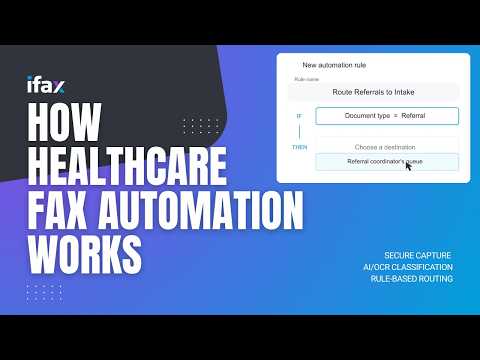
For a concise walkthrough, watch the video below that explains how healthcare organizations automate faxing using cloud services. When you’re comfortable with the basics, explore the provider’s dashboard to set up users, assign fax numbers, and integrate with the tools you already use.
Remember, the goal is to make faxing as effortless as email while keeping the security and compliance you need. For more detailed guidance, visit how to fax from computer.
ความเห็นล่าสุด